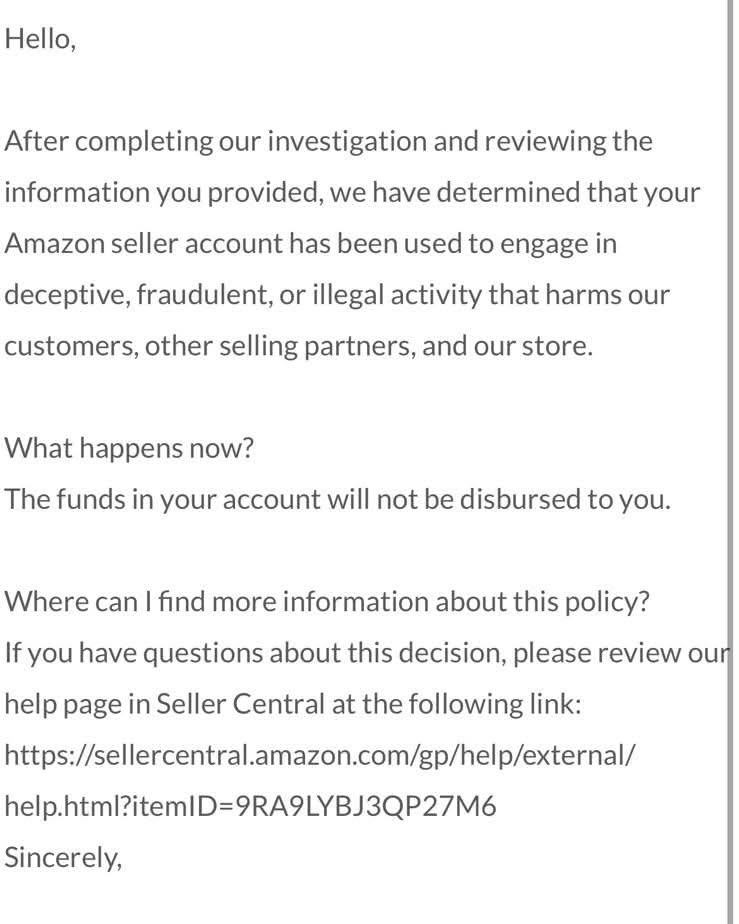
Amazon’s identity and account verification reviews aren’t always triggered by a single mistake. Often, it’s Amazon flagging inconsistencies across the account as a whole, and calling for a video interview to confirm the seller behind it is legitimate.
The problem is most sellers treat the interview like a formality. They get the notice, book the earliest slot, and show up without actually checking what’s inconsistent on their own account first. That’s usually where things go wrong, because the interview isn’t really about answering questions. It’s about your account already matching what you’re going to say.
This interview is also the last real chance to save the account. Once it fails, roughly 80% of accounts never get reinstated after that. There’s no strong second attempt waiting after this one.
Some of the most common issues sitting underneath these reviews, that sellers don’t realize are red flags until it’s too late:
→ Payment inconsistencies
Payment methods that don’t match the seller’s registered name or business details, especially old accounts with payment info that was never updated.
→ Outdated business information
Business or personal information that’s outdated, inconsistent, or doesn’t align across the account, tax documents, and bank details.
→ Unverified sourcing
Sourcing from suppliers who aren’t actually recognized by the brand as authorized distributors, so when asked, there’s nothing solid to point to.
→ Invoice mismatches
Invoices that don’t match the seller’s business name, have mismatched dates, or don’t reflect a real transaction trail between the seller and the supplier.
→ Unverifiable transactions
Transactions that can’t be verified, meaning there’s no clean bank or payment record backing up the invoices being submitted.
Any one of these on its own might not trigger a suspension. But when Amazon sees several of them together, it treats the account as high-risk, and that’s when the interview or verification request comes in.
The mistake we see most often is sellers walking into that interview treating it as a hurdle to get past, instead of realizing it’s a check of everything sitting behind their account.
By the time they’re answering questions, it’s already too late to fix what Amazon is actually looking at, and with an 80% failure-to-reinstate rate after a failed interview, there’s very little room to get this wrong.