The seller
A United States-based leather goods manufacturer. Not a reseller, not dropshipping. His own designs, his own leather, his own workshop. A real brand owner with a real product.
The mistake
To push sales faster, he added a well-known brand’s logo to his listings and onto the jackets themselves. In his mind, smart marketing. To Amazon, counterfeit.
The suspension
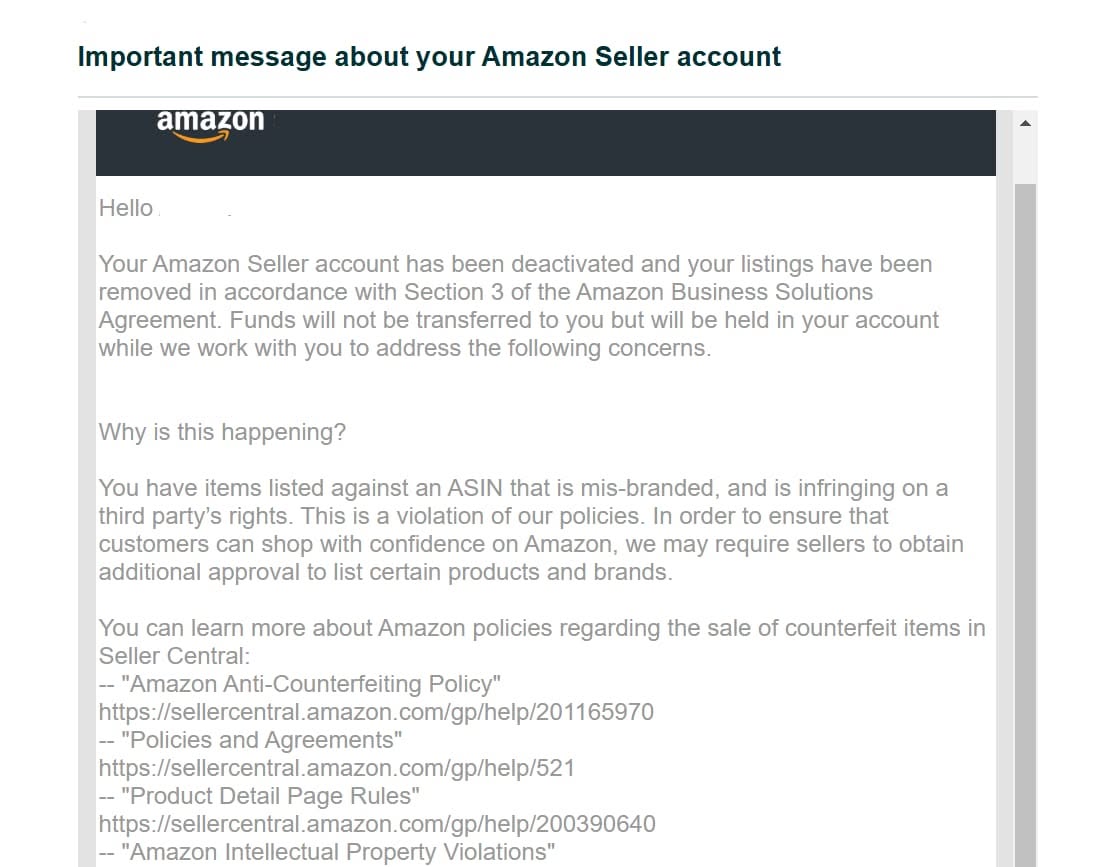
Within days the account was deactivated under Section 3 of the Amazon Business Solutions Agreement. A classic misbranding suspension, triggered by an unauthorized trademark on a mis-branded ASIN. Listings removed. Funds frozen and held.
The trap most sellers fall into
Here is where the case is lost before it starts. The seller’s instinct was the one argument that feels obvious and is fatal: “But I manufacture these myself; they aren’t fake.” Amazon doesn’t care who stitched the jacket. The moment an unauthorized trademark appears, the system reads infringement and quality becomes irrelevant. Every appeal built on “my product is real” gets auto-rejected.
How it actually worked
Step one was never the appeal. It was a diagnosis, separating two issues that look like one: the trademark infringement and the authenticity question. We isolated the true root cause, the unauthorized brand usage, and built the entire case around that single point.
Every infringing element was removed across the catalog before a word went to Amazon. You never request reactivation while the violation is still live.
Then the Plan of Action hit the three things Amazon investigators look for a root cause that admits the actual policy was broken, corrective action already complete, and preventive measures that prove it won’t repeat. No excuses. No arguing the penalty.
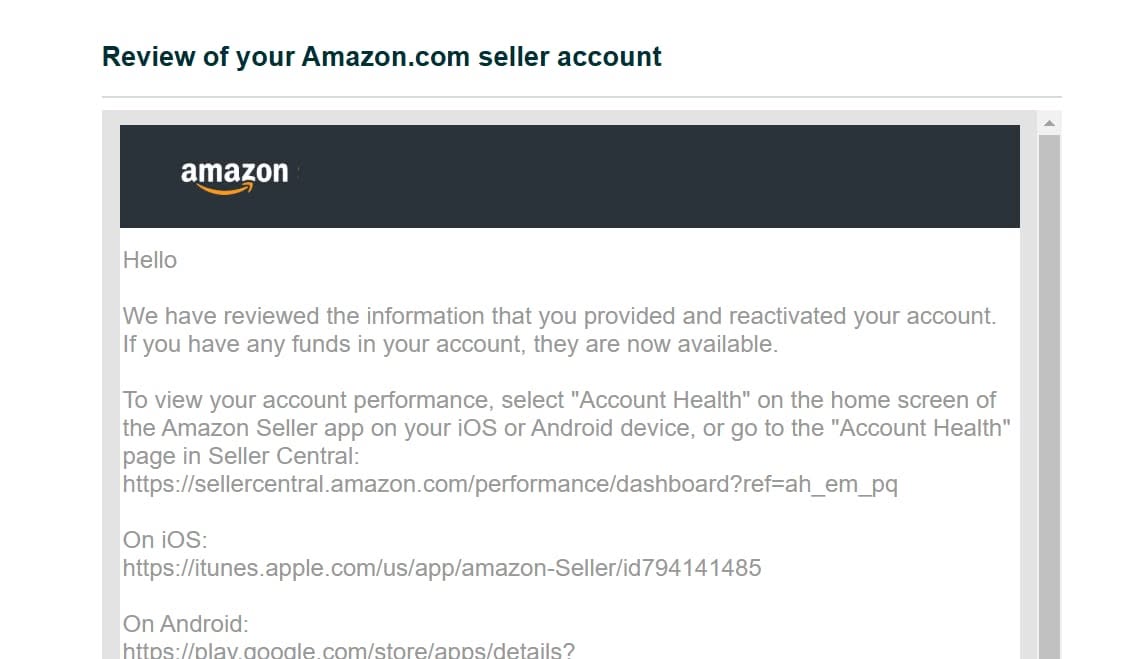
Get the reinstatement right, and the funds will follow. The moment Amazon reactivated the account, the held funds became available automatically. That is the leverage point most sellers miss: they chase the money and the account separately, when a clean reinstatement releases both at once.
The outcome
Account reactivated. Listings restored. Held funds released.
The takeaway
For every private label and brand owner selling on Amazon in the US, making your own product does not make you safe. Branding is a legal tripwire, not a growth hack. One borrowed logo can freeze an entire business overnight.
Amazon seller account suspended, an IP complaint, a misbranding flag, a Section 3 deactivation, or withheld funds, and Amazon keeps rejecting your appeals?